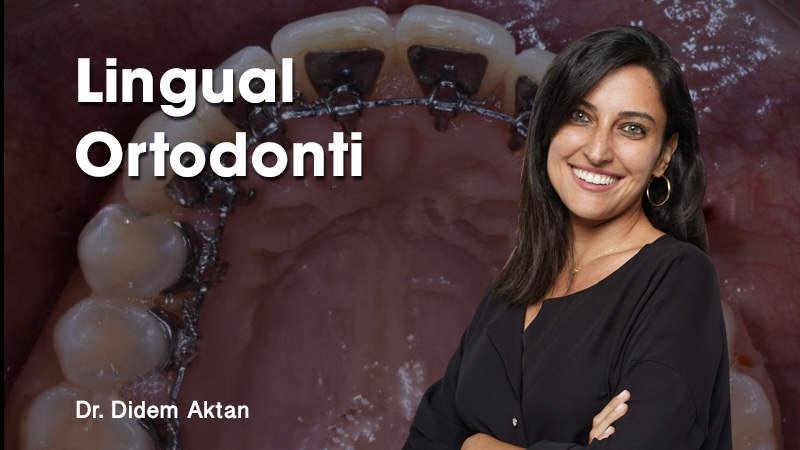
Lingual Orthodontics: Personalized Esthetic and Biological Advantages
Lingual orthodontic systems function with brackets placed on the lingual surfaces of the teeth, offering an invisible treatment alternative for patients with high esthetic demands.
Custom-made lingual orthodontic systems provide enhanced precision and predictability in both treatment planning and clinical application. Through three-dimensional digital modeling and CAD/CAM technologies, patient-specific brackets and archwires can be manufactured, significantly improving treatment fit and overall success. Studies have reported that, compared with labial orthodontic systems, the incidence of caries—particularly white spot lesions—is up to six times lower in lingual orthodontic treatments. Recent reviews further emphasize that lingual orthodontics offers additional advantages over labial systems in terms of esthetics and oral health, with better control of caries development and white spot lesion formation on bracketed surfaces.
In the post-treatment period, case-specific evaluation, individualized system workflows, lingual bracket approaches in Class II malocclusions, and the advantages provided in interdisciplinary treatments represent key components of modern orthodontic practice. Addressing common misconceptions and discussing solution strategies through clinical cases help clinicians develop a more comprehensive understanding of the lingual orthodontic concept.
Watch the Course:
In this session “Lingual Orthodontics” prepared by Dr. Didem Aktan, an experienced clinician and educator in the field of orthodontics, all stages of lingual orthodontic treatment—from customized systems to case-based clinical workflows—are presented in detail through clinical case photographs, along with practical treatment solutions.
References
1. Wiechmann D, Klang E, Helms HJ, Knösel M. Lingual appliances reduce the incidence of white spot lesions during orthodontic multibracket treatment. Am J Orthod Dentofacial Orthop. 2015;148(3):414–422. doi:10.1016/j.ajodo.2015.05.015
2. Nandakumar S, Tandon A, Chandrasekaran D, et al. Implications of lingual orthodontics compared to conventional orthodontics. Cureus. 2024;16(10):e72588. doi:10.7759/cureus.72588