Root Canal Filling Techniques
Long-term success in endodontic treatment is directly related not only to the removal of infected tissues but also to proper filling of the root canal system. Advances in technology have led to significant changes in contemporary treatment protocols, with techniques such as warm vertical condensation, bioceramic-based hydraulic condensation, and apical plug techniques gaining increasing prominence.
Although the conventional cold lateral condensation technique has long been considered the standard approach, inadequate adaptation may occur in certain anatomical variations, resulting in void formation and an increased risk of reinfection. In contrast, warm vertical condensation allows heated gutta-percha to adapt more closely to canal walls, thereby improving hermetic sealing, particularly in complex root canal anatomies.
Bioceramic-based hydraulic condensation techniques, on the other hand, utilize biocompatible sealers capable of maintaining effectiveness in moist canal environments and are commonly combined with the single-cone technique. This approach not only shortens clinical procedure time but also enhances apical sealing quality.
The apical plug technique is especially indicated for teeth with open apices or wide apical foramina. Bioceramic materials used in this technique create an apical barrier, enabling controlled obturation while demonstrating excellent biocompatibility with periapical tissues and supporting the healing process.
The success of these techniques is not limited to the fillling step alone but also depends on meticulous canal shaping, irrigation, and drying procedures. Furthermore, the use of dental operating microscopes and magnification systems significantly contributes to accurate canal orifice identification and improved filling quality.
Watch the Course:
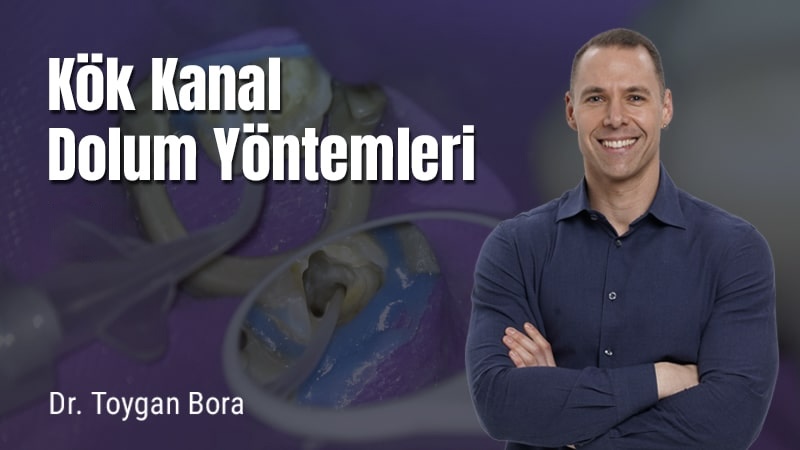
In this session, a series of three educational videos prepared by Dr. Toygan Bora presents both the theoretical background and clinical applications of contemporary root canal filling techniques in detail. In the hands-on video, root canal treatment performed using the warm vertical condensation technique in a patient diagnosed with pulpitis is demonstrated step by step. Recorded under a dental operating microscope, the video provides a case-based walkthrough of the entire process—from access cavity preparation to final obturation—along with the instruments used. This content serves as a practical visual guide for clinical application.
References
1. Samadi F, Jaiswal J, Saha S, et al. A comparative evaluation of efficacy of different obturation techniques used in root canal treatment of anterior teeth: an in vitro study. Int J Clin Pediatr Dent. 2014;7(1):1–5. doi:10.5005/jp-journals-10005-1224
2. Alkahtany SM, AlHussain AA, AlMthen HA, et al. Obturation quality of bioceramic sealers with different obturation techniques: a micro-CT evaluation. Sci Rep. 2024;14(1):31146. doi:10.1038/s41598-024-82481-w
3. Gharechahi M, Hoseinzadeh M, Moradi S, Mehrjouei M. Evaluation of various obturation techniques with bioceramic sealers in 3D-printed C-shaped canals. BMC Oral Health. 2024;24(1):554. doi:10.1186/s12903-024-04334-2